The Russia Threat

shutterstock_376524589

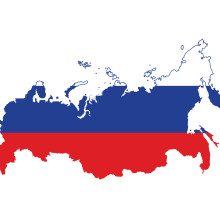
Several weeks ago, I posted a blog that talked about our new national security paradigm, focused specifically on the “4+1 construct.” This new way of looking at threats to our nation focuses on “four contingencies and one condition.” Russia is one of those contingencies.

If there is one nation, and one leader, who makes it a practice to “poke” at the United States, it’s Russia’s Vladimir Putin. There has been an avalanche of media reporting on the fraught relationship between Russia and the West, including this front-page piece in Sunday’s New York Times entitled, “Putin and Merkel: A Rivalry of History, Distrust and Power.” You can read this compelling piece here

First, there are longstanding issues between the West, and especially the United States and Russia. Among the most prominent:

  • Long-standing enmity against the West
  • Views the United States as the architect of containment
  • A deep, visceral desire to change the global order (zero-sum)
  • Demonstrated willingness to attack neighbors with kinetic or cyber-attacks: Georgia, Estonia, Crimea, Ukraine
  • Murders of political opponents and dissidents (Litvinenko)

But in addition to these long-standing issues, since the fall of 2015, Russia is behaving in ways that worry the United States. Among the biggest issues:

  • Overt support for Assad’s regime in Syria
  • Hacking of U.S. election returns
  • Recent stepped-up military incursions in Ukraine
  • Stepped up military exercises around NATO’s periphery (Baltics)

Worrisome signs. Stay tuned to this blog over the next several weeks to learn more about other threats to our national security.
Enlightened America?

28brooksWeb-blog427

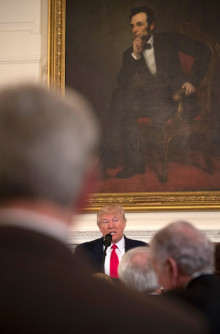
Are we Americans enlightened? David Brooks gave us something to think about in a recent piece in the New York Times. Here is part of what he shared:

“When anti-Enlightenment movements arose in the past, Enlightenment heroes rose to combat them. The Enlightenment included thinkers like John Locke and Immanuel Kant who argued that people should stop deferring blindly to authority for how to live. Instead, they should think things through from the ground up, respect facts and skeptically re-examine their own assumptions and convictions.”

“De Tocqueville came along and said that if a rules-based democratic government was going to work anywhere it was going to be the United States. America became the test case for the entire Enlightenment project. With his distrust of mob rule and his reverence for law, Abraham Lincoln was a classic Enlightenment man. His success in the Civil War seemed to vindicate faith in democracy and the entire Enlightenment cause.”

The forces of the Enlightenment have always defeated the anti-Enlightenment threats. When the Cold War ended, the Enlightenment project seemed utterly triumphant. But now we’re living in the wake of another set of failures: the financial crisis, the slow collapse of the European project, Iraq. What’s interesting, Hill noted, is that the anti-Enlightenment traditions are somehow back. Nietzschean thinking is back in the form of Vladimir Putin. Marxian thinking is back in the form of an aggressive China. Both Russia and China are trying to harvest the benefits of the Enlightenment order, but they also want to break the rules when they feel like it. They incorporate deep strains of anti-Enlightenment thinking and undermine the post-Enlightenment world order.

Want more? You can read this fascinating article here.

Our Robot Partners

26mag-26machines-t_CA0-superJumbo

Americans – like most people everywhere – have a conflicted relationship with artificial intelligence, autonomy, and robots. Popular culture has a great deal to do with this.

One of the most iconic films of the last century, Stanley Kubrick’s 2001: A Space Odyssey had as its central theme, the issue of autonomy of robots (the unmanned vehicles of the time). Few who saw the movie can forget the scene where astronauts David Bowman and Frank Poole consider disconnecting HAL’s (Heuristically programmed ALgorithmic computer) cognitive circuits when he appears to be mistaken in reporting the presence of a fault in the spacecraft’s communications antenna. They attempt to conceal what they are saying, but are unaware that HAL can read their lips. Faced with the prospect of disconnection, HAL decides to kill the astronauts in order to protect and continue its programmed directives. While few today worry that a 21st century HAL will turn on its masters, the issues involved with fielding increasingly-autonomous unmanned systems are complex, challenging and contentious.

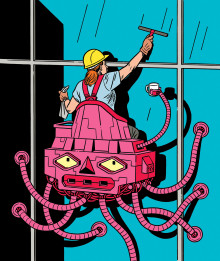
At the next level down from the notion of robots becoming our masters is the issue of these robots taking our jobs. President Obama suggested as much in one of his last addresses as president.

There is vastly more heat than light on this issue. That’s why I found this article, “Learning to Love Our Robot Co-workers,” so revealing. Here is part of what it said:

“The most important frontier for robots is not the work they take from humans but the work they do with humans — which requires learning on both sides.”

Intrigued? You can read the full article here.

America’s Future Wars

05CASUALTIES-sub-master768

America is still at war. But increasingly, that war is fought in the shadows, using our warriors from the United States Special Operations Command (SOCOM) to carry the fight to the enemy. It is a deadly serious war and our SOCOM men and women are carrying a hugely disproportionate share of the fighting and dying.

Since our SOCOM warriors operate primarily in the shadows and secretive missions, little is known about them. That’s why this article, “Special Operations Troops Top Casualty List as U.S. Relies More on Elite Forces,” was so revealing and enlightening. Here’s a snippet to whet your appetite:

“Over the last year, Special Operations troops have died in greater numbers than conventional troops — a first. During the wars in Iraq and Afghanistan, they made up only a tiny sliver of the dead. That they now fill nearly the whole casualty list shows how the Pentagon, hesitant to put conventional troops on the ground, has come to depend almost entirely on small groups of elite warriors.”

I’ve never read an article that revealed so much about what our  SOCOM warriors do to protect us. It spoke to me and I think it will speak to you.

You can read this intriguing article here.

It’s the Economy Stupid

21brooksWeb-master768

It has been a quarter-century since Bill Clinton’s campaign manager, James Carville, coined the phrase, “It’s the economy, stupid” as a focusing metaphor for Clinton’s campaign workers as the campaign sought to unseat a sitting president, George H.W. Bush. It worked, and Clinton became our 42nd president by driving home the message that he could fix America’s economy.

Most agree that he did, but since then, the U.S. economy has been on roller coaster ride of boom and bust. Many of us feel that the nation is moving forward from the depths of the 2008 recession.

But are we really making progress? David Brooks asks this question in his op-ed piece, “This Century is Broken.” Brooks suggests that the 21st century is looking much nastier and bumpier: rising ethnic nationalism, falling faith in democracy, a dissolving world order. Then he points out that at the bottom of all this, perhaps, is declining economic growth. His thoughts are chilling:

Read this intriguing, and troubling, article here.

Cyber War

08hacking6-superJumbo-v3

We are inundated by information about the cyber world – most of it negative. Russian hacking designed to influence the American election, Wiki-leaks, NSA monitoring of phone conversations, scammers emptying bank accounts and the like. The information comes at us so fast and furious that for most of us, there’s more heat than light.

That’s why I found the article, “The @ – Bomb” so revealing. It lights a candle on the extent of the threat cyber poses to nations, as well as to individuals.

I’ve poured over the article looking for snippets to share with you, but it’s a fool’s errand. Spend some time devouring this great piece. You won’t be disappointed.

Thought provoking? You can read the full article here.

The China Threat

2000px-Flag-map_of_the_People's_Republic_of_China.svg

Two weeks ago, I posted a blog that talked about our new national security paradigm, focused specifically on the “4+1 construct.” This new way of looking at threats to our nation focuses on “four contingencies and one condition.” China is one of those contingencies.

China’s economic rise over the last several decades has been breathtaking, and has lifted hundreds of millions out of poverty. But China’s newfound economic prosperity has also enabled that nation to build a highly capable military. China has strong regional ambitions and is using its military to achieve them.

One thing we should ask is this: Since the “4+1 construct” was announced in the fall of 2015, identifying China as a nation we needed to be concerned about and be prepared to deal with from a military perspective, how have things been going? Are our relations with China getting better or worse?

First, there are longstanding issues between the United States and China. Among the most prominent:

  • China’s self-declared “Century of Humiliation” at the hands of the West
  • China’s economic boom that is fueling a rapid military buildup
  • A strong belief that the United States is trying to “encircle” China
  • Regional ambitions that are enhanced and enabled by military capabilities

But in addition to these long-standing issues, since the fall of 2015, China is behaving in ways that worry the United States. Among the biggest issues:

  • Chinas aggressive actions toward smaller neighbors, some of them U.S. allies
  • China’s relentless military buildup on South China Sea islands, rocks and reefs
  • China’s demonstrated intent to flout international law, ignoring the Hague ruling
  • China’s deployment of a PLAN aircraft carrier to the South China Sea
  • China’s strong, negative, reaction to SECDEF Mattis on the Senkaku Islands
  • The recent seizure of U.S. UUV in international waters of the South China Sea
  • The new administration has denounced China’s maritime bullying

Worrisome signs from a nation that will soon eclipse our economy. Stay tuned to this blog over the next several weeks to learn more about other threats to our national security.
America and the Oscars

26suderman-master768

I suspect many of you watched the Academy Awards show Sunday night – all four-hours worth – closer to eight if you count the Red Carpet warm-up.

Many of us think that art imitates life and that the kind of movies nominated for the Oscar represent us – American writ large.

That’s why I found this article “America as Told by the Oscars,” so riveting and eye-opening. It spoke to me, and I think it will speak to you. Here is part of what the writer said:

“For years, the Academy Awards reliably recognized movies that attempted to capture the sweep of the American idea — in earnest films like “Forrest Gump” and “Saving Private Ryan” as well as more scorching efforts like “There Will Be Blood” — that seemed to want to define the country, and its people, all at once. If you wanted a shot at a best-picture Oscar in that era, an ambitious statement film that tried to tell Americans who they really are was a good bet.”

“The narrow, personal focus of this year’s top Oscar nominees suggests how tough it may be for Americans, or Hollywood, to settle on a single unifying vision of what America means, or what it means to be an American. It may never again be possible for one movie to fully answer those questions. More likely, it never was.”

“Yet this year’s best-picture crop may have provided an answer — in the notion that there is no one American story, but a variety of specific and unique American stories, and in the idea that America is a nation of both individualism and pluralism. You might think of the movies in the best-picture category as a kind of expanded cinematic universe — not of superheroes, but of ordinary, extraordinary lives, overlapping and intersecting in a sprawling national epic too big for any one film.”

“Of course, that means the task is more difficult for moviegoers as well: If you really want to find out what America looks like, you have to watch all of them.”

You can read this fascinating article here.

Deconstructing a Novel

freytag

There are many ways to get advice regarding writing a novel. There are courses, experts and any number of books and online advice. How to sort the wheat from the chaff?

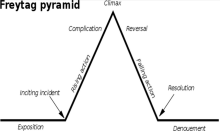
I’ve been writing for as long as I can remember and focusing on novels in particular for almost twenty years. While it’s hard to pick the “best” advice I’ve ever encountered, I’ll offer the Freytag Pyramid as one we can all benefit from. From my perspective, you can deconstruct any novel and it fits this model.

freytag

Very briefly, here is what each part comports:

  1. Exposition: setting the scene. The writer introduces the characters and setting, providing description and background.
  2. Inciting Incident: something happens to begin the action. A single event usually signals the beginning of the main conflict. The inciting incident is sometimes called ‘the complication’.
  3. Rising Action: the story builds and gets more exciting.
  4. Climax: the moment of greatest tension in a story. This is often the most exciting event. It is the event that the rising action builds up to and that the falling action follows.
  5. Falling Action: events happen as a result of the climax and we know that the story will soon end.
  6. Resolution: the character solves the main problem/conflict or someone solves it for him or her.
  7. Dénouement:(a French term, pronounced: day-noo-moh) the ending. At this point, any remaining secrets, questions or mysteries which remain after the resolution are solved by the characters or explained by the author. Sometimes the author leaves us to think about the THEME or future possibilities for the characters.

Artificial Intelligence

29CHINAAI2-master768

Artificial intelligence, AI, has dominated the news in recent years – and it should. The promise offered by AI in the commercial sector, think, for example, of driverless cars, is revolutionizing our thinking about how much AI can make our lives better.

That said, one of the most controversial aspects of AI is its use in military weapons. Here is how an article entitled, “Morals and the Machine,” in The Economist addressed the issue of AI in military unmanned systems this way:

As they become smarter and more widespread, autonomous machines are bound to end up making life-or-death decisions in unpredictable situations, thus assuming—or at least appearing to assume—moral agency. Weapons systems currently have human operators “in the loop”, but as they grow more sophisticated, it will be possible to shift to “on the loop” operation, with machines carrying out orders autonomously.

As that happens, they will be presented with ethical dilemmas. Should a drone fire on a house where a target is known to be hiding, which may also be sheltering civilians? Should a driverless car swerve to avoid pedestrians if that means hitting other vehicles or endangering its occupants? Should a robot involved in disaster recovery tell people the truth about what is happening if that risks causing a panic?

Such questions have led to the emergence of the field of “machine ethics,” which aims to give machines the ability to make such choices appropriately—in other words—to tell right from wrong. More collaboration is required between engineers, ethicists, lawyers and policymakers, all of whom would draw up very different types of rules if they were left to their own devices.

Until recently, the United States had the dominant position in AI, especially AI used for military purposes. That is no longer the case. Here is the way a recent New York Times article entitled, “China’s Intelligent Weaponry Gets Smarter,” began:

“Robert O. Work, the veteran defense official retained as deputy secretary by President Trump, calls them his “A.I. dudes.” The breezy moniker belies their serious task: The dudes have been a kitchen cabinet of sorts, and have advised Mr. Work as he has sought to reshape warfare by bringing artificial intelligence to the battlefield.

“Last spring, he asked, ‘O.K., you guys are the smartest guys in A.I., right?’”

“No, the dudes told him, ‘the smartest guys are at Facebook and Google,’ Mr. Work recalled in an interview.”

“Now, increasingly, they’re also in China. The United States no longer has a strategic monopoly on the technology, which is widely seen as the key factor in the next generation of warfare.”

Read this intriguing article here